Miso soup
When the cold sets in, the body tends to crave less stimulation and more restraint. Less noise. More warmth. Miso soup is one of those recipes that doesn't seek to impress, but rather to accompany. Light but nutritious, easy to digest, and deeply comforting, it's ideal for days when you want something warm without it being too heavy. A simple dish that helps you slow down and take care of your digestion, especially in winter.
Why it works so well at this time of year
Miso is a fermented food that, when used correctly, can be a great ally for the microbiota and digestion. Combined with hot broth, soft vegetables, tofu, and seaweed, it creates a complete dish that hydrates, nourishes, and comforts from within. It is not a soup to “compensate,” but to sustain. To accompany the body when it needs something kind.
Ingredients
1 liter vegetable stock or mild chicken stock
2–3 tablespoons miso paste (white or red, depending on desired intensity)
1–2 carrots, thinly sliced
100–150 g fresh shiitake mushrooms, sliced (or 4–5 dried, soaked for 20 min)
100 g firm or soft tofu, cubed (optional: one egg added at the end of cooking)
1 tablespoon dried wakame seaweed
100–150 g noodles (udon, soba, or ramen)
A small piece of leek or onion (optional)
2–3 chopped scallions for serving
Optional depending on the day: fresh ginger, sesame oil, sesame seeds, pak choi, or Swiss chard.
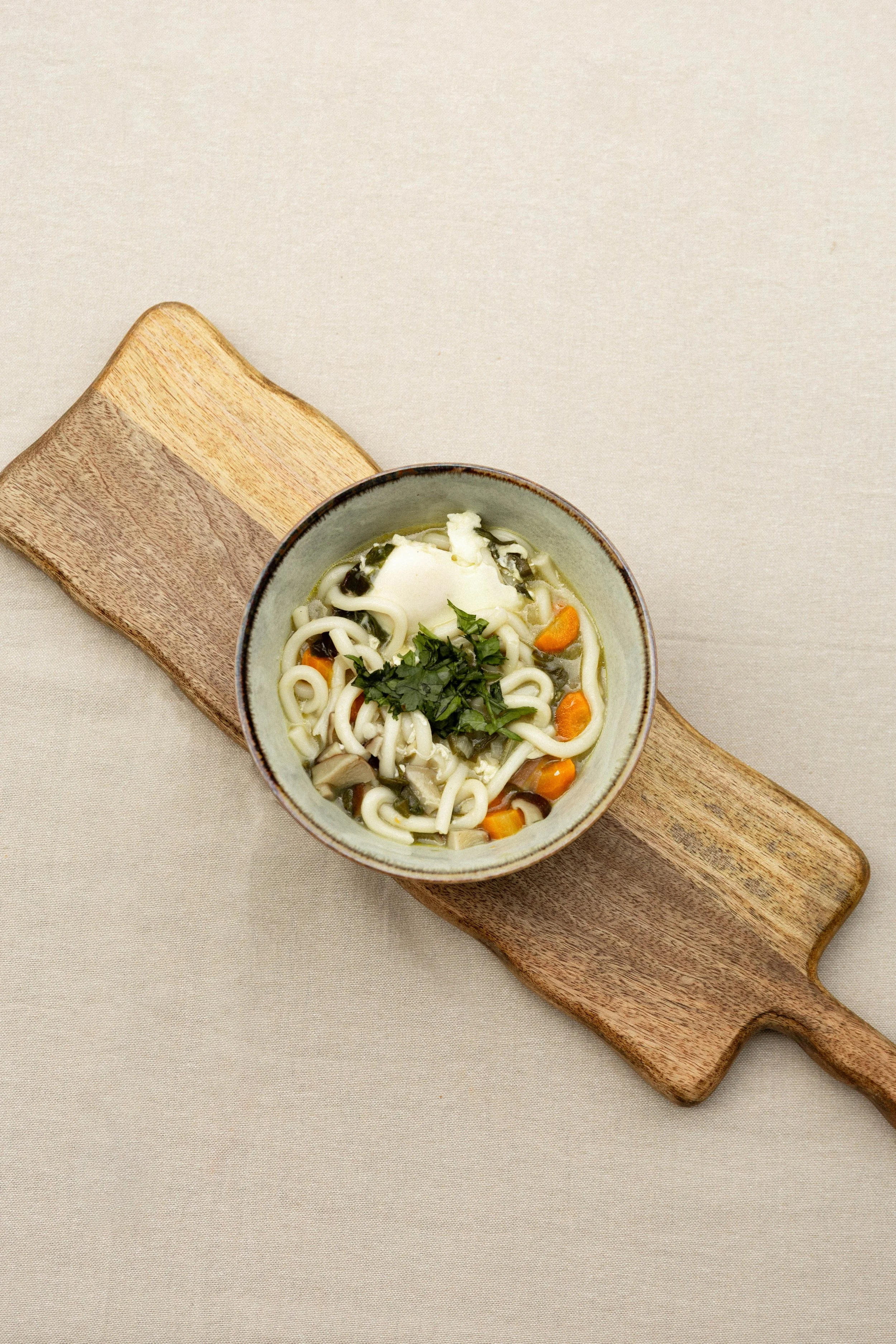
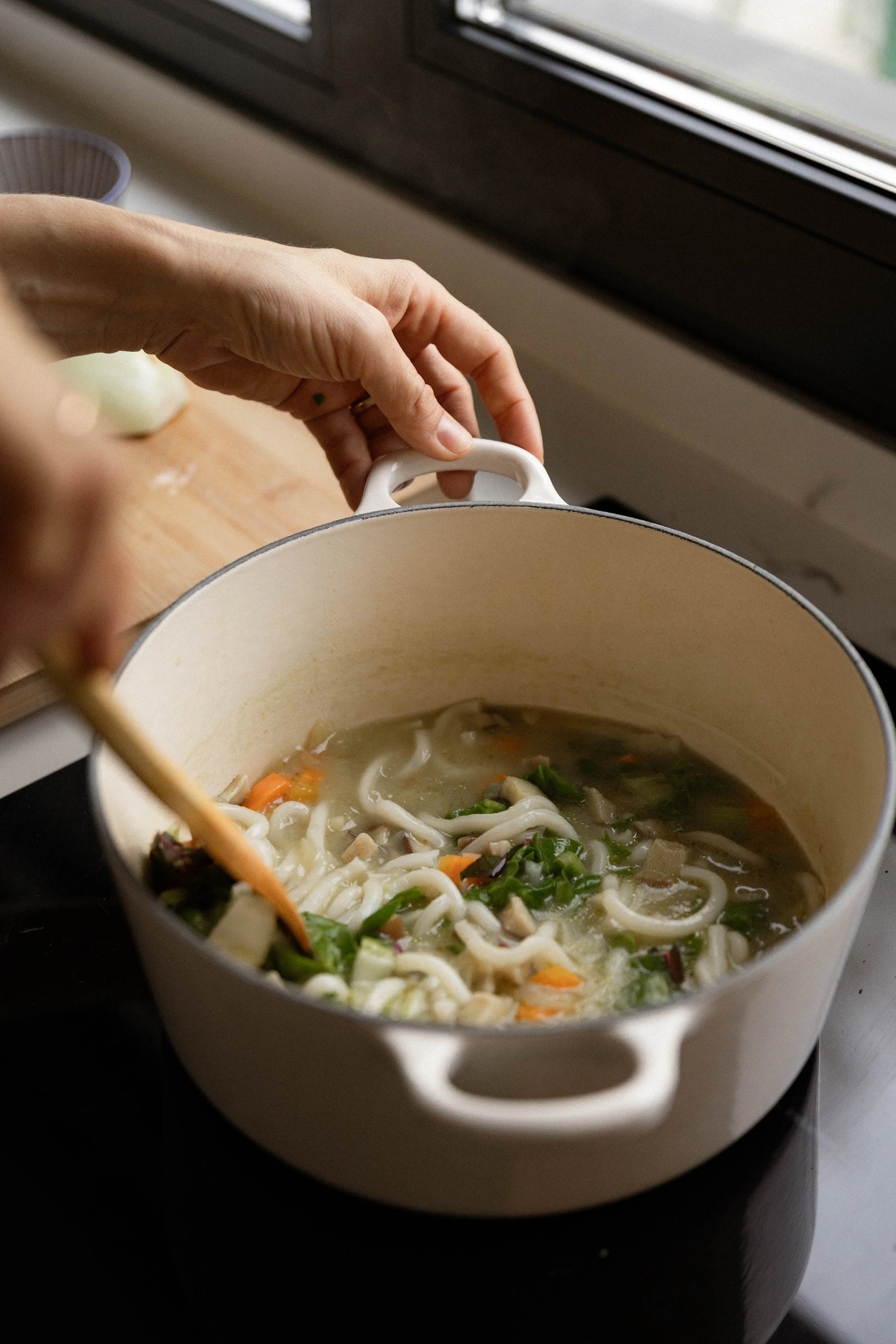
Step-by-step preparation
1. Hydrate the wakame. Place the seaweed in a bowl with water for 5 minutes. Drain and set aside.
2. Cook the noodles according to the package instructions. Drain and set aside. If you want to prevent them from sticking, rinse them briefly under cold water.
3. Prepare the broth with the vegetables. Heat the broth or water in a large pot. Add the carrot, leek or onion, and shiitake mushrooms. Cook over medium heat for about 10–12 minutes, until the vegetables are tender.
4. Add the diced tofu and rehydrated wakame. Cook for another 2–3 minutes over low heat.
5. The key step: add the miso without boiling. Turn off the heat or reduce it to low. Place the cooked noodles in the pot. Dissolve the miso paste in a bowl with a little hot broth and then add it to the soup. Do not let it boil: this will preserve its flavor and properties.
6. Serve calmly. Finish with chopped chives and, if you like, a few drops of sesame oil or toasted seeds.